FOR OWNERS OF CUSTOM FAB SHOPS

The most expensive shop in town

Someone has to be. This is the playbook for making it you: what a discount really costs, what a customer is really telling you when they push back, the words that hold your price, and when to walk away from the job altogether.

PL
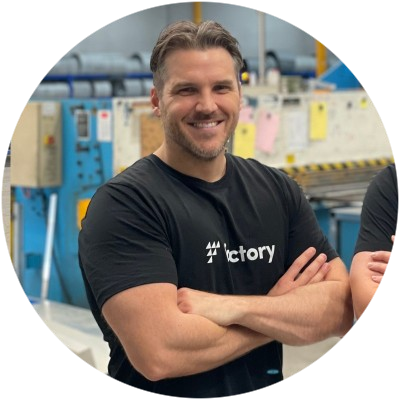
Paul Lutkajtis
Founder, Factory · our family has run a fab shop for almost 50 years
WHAT THIS COVERS
01What a discount really costs
02The four kinds of pushback
03The scripts, ready to copy
04When to walk away
FREE TOOL · NOTHING TO SIGN UP FOR

The same playbook, live

Run your own numbers through the discount math, get the words for the pushback you actually heard, and score your shop's pricing habits. Two minutes, right here in your browser.

01See what a discount costs
02Get the right words
Score your shop
WHY SOMEONE HAS TO BE

Anyone can be cheap. Not everyone can deliver.

Every town has one. The shop that charges more than everyone else, doesn't apologize for it, and stays booked out anyway. Ask around and nobody calls them a rip-off. They say: they're not cheap, but they're never late, and it's right the first time.

Then there's the rest of us, quoting scared. Cheap feels safe because the phone keeps ringing, but there is always someone hungrier than you, and you cannot win that one for long. That is what you charge for.

WHAT THEY'RE ACTUALLY PAYING FOR
Certainty. The date you give is the date it ships.
One call. A person who answers, not a runaround.
Right first time. No call-backs, no patch-ups on site.
No surprises. The quote says what's in. It stays in.
And the bit nobody puts on a quote. People work with people they want to work with. Being straight with them, easy to get hold of, and good to deal with is worth real money.
01 · A REAL RATE
Worked out from what it actually costs you to run the place, not handed down from whoever trained you.
02 · A CLEAN QUOTE
What's included, in writing, no grey areas. A clear quote saves you most of the argument.
03 · YOUR OWN BELIEF
If they don't believe you are convinced it's the right price, they won't be either. That's what the rest of this is for.
WHAT A DISCOUNT COSTS

Ten percent off doesn't cost you ten percent

Prefilled with a sample job - a $13,000 build quoted at $20,000. Clear it and run your own.

Profit before the ask: {{ baseProfitFmt }}. Ask for {{ discountPct }}% off {{ quotePriceFmt }} and here's where it comes from:
WHAT YOU GIVE UP ON THIS JOB
{{ discountAmountFmt }}
WHERE IT COMES FROM
Cost {{ jobCostFmt }}
Kept {{ newProfitFmt }}
Gone
The steel doesn't get cheaper because the customer asked nicely, so the whole discount comes out of the last slice. That's {{ profitLostPctFmt }} of your profit gone, on a {{ discountPct }}% ask.
IN HOURS
{{ hoursGoneFmt }}
ACROSS {{ jobsPerYearLabel }} JOBS/YR
{{ annualGoneFmt }}

To make that back you need about {{ extraWorkPctFmt }} more work at the new price. The discount is the most expensive thing in your shop.

THE PUSHBACK

"That's a bit more than I expected"

Expect it. It's only ever one of four things. First move, every time: answer pushback with a question, never a number. Pick what you heard.

THE FIRST WORDS OUT OF YOUR MOUTH
"No problem. Can I ask what's making it feel high?"
Never ask what number they had in mind - that tells them there's room to move. Ask why instead, because the reason is the thing you can actually answer.
{{ activePushback.take }}
THE SCRIPT · WORD FOR WORD
{{ activePushback.script }}

Notice what never gets said: sorry. You are not apologizing for the price, you are standing behind it.

HOLDING IT

Move the scope. Never the rate.

If the budget's genuinely short and you'd still like the job: change what the number buys, not what your hour costs.

SCOPE"We can get closer to that number with galvanized instead of stainless."
TIMING"If you're not in a rush, I can build it alongside a similar job next month and pass the saving on."
DELIVERY"Pick it up from the shop instead of delivery and that comes off the total."
TIP
QUOTE ONE NUMBER, LIST WHAT'S IN IT
Line items invite line-item shopping. One number says one price, one shop, and it's all on us.
TIP
TELL THE CREW WHAT AN HOUR COSTS
When the floor knows the real number, nobody promises a freebie at the gate.
THE HABIT THAT COSTS THE MOST
Don't negotiate with yourself. You give the price, the customer goes quiet, and before they've asked for a thing you hear yourself softening it. Say the number, then let it sit.
THE STRONGEST PLAY

Be willing to walk away

If they still won't go there, that's not a fight to win. You two just don't agree on what the job is worth, and that's fine.

IT PROVES THE NUMBER
A price you'll drop under pressure was never your price.
IT PROTECTS GOOD WORK
A cheap job takes up the same week a good one needed.
THEY OFTEN COME BACK
On your terms this time.
HOW TO SAY IT, AND STAY FRIENDLY
"I don't think we're the right shop for this one, and I'd rather tell you that than cut corners to hit your number. If the cheaper option doesn't work out, call me and we'll pick it back up. No hard feelings either way."
SCORE YOUR SHOP

The eight habits that hold a price

One tap per row. 1 means never, 5 means every job without fail. Honest answers only.

NEVER EVERY JOB
{{ row.label }}
{{ answeredLabel }} {{ scoreLabel }}
{{ scoreValue }} / 40
{{ bandLabel }}
33-40 most expensive shop in town25-32 charging fair, folding sometimes8-24 priced on fear
KEEP THIS ONE BY THE PHONE

The pocket card

THE POCKET CARD
FIRST MOVE: "WHAT'S MAKING IT FEEL HIGH?"
THEY HAVE A CHEAPER QUOTE
"We're not the cheapest, and that's on purpose. You're buying who's doing the work, not just the steel."
THEN: don't match it. Unpack it.
THEY DIDN'T EXPECT THAT MUCH
"Fair enough, let me run you through it."
THEN: walk the quote. Remove scope, never shave the number.
LAST TIME WAS CHEAPER
"You're right, it is up. It costs us more to make now."
THEN: name what moved. Steel, power, wages.
THEY'RE TRYING THEIR LUCK
"That's my price, and it's a fair one. Best number first, nothing padded."
THEN: hold it. Offer scope or timing, never the rate.
Paul Lutkajtis
Paul Lutkajtis · Founder, Factory. Our family has run a fab shop for almost 50 years, and that's what shaped Factory: quotes with a real rate behind them, what a job actually cost against what you quoted, and what you kept when it shipped. Holding your price is a lot easier when those numbers are in front of you instead of in your head.
QUESTIONS

Straight answers

No. Nothing you type into the calculator or the scorecard is stored or sent anywhere. Refresh the page and it's gone.

Word for word. This is the interactive version of the same playbook, built so you can run your own numbers and copy the scripts straight from the screen.

No. It's free and works on its own. If it's useful, the demo is there when you're ready, not before.

Because the discount comes off your profit, not your price. Your cost doesn't drop because the customer asked nicely, so the whole discount comes out of the slice you were keeping. Take 10% off the price and you can easily take a third off the profit.

BOOK A DEMO

See it on your own jobs.

Bring a quote you're about to send. We'll show you the real rate behind it, live, inside Factory - no slides, no gimmicks.

300+ shops run on it · built by fabricators · up in weeks, not months

Takes you straight to the calendar. Times shown in your local timezone.

We don't just build the software. We know the work.

Straight-talking advice on running a sharper, more profitable shop - pricing, people, and the floor. Written for fabricators, by people who've done the work.

Steel & Sense
Read Steel & Sense →
PROFITABILITY
How to price jobs for profit, not just survival
The pricing levers that keep every job adding to your bottom line, not eroding it.
6 min readRead
PROFITABILITY
Why hiding pricing from your team might be costing you
What happens to the margin when the crew never sees the number a job was quoted against.
5 min readRead
PROFITABILITY
5 workshop habits that quietly cost you thousands
Small habits that quietly erode the margin on every job, and the fix for each one.
5 min readRead